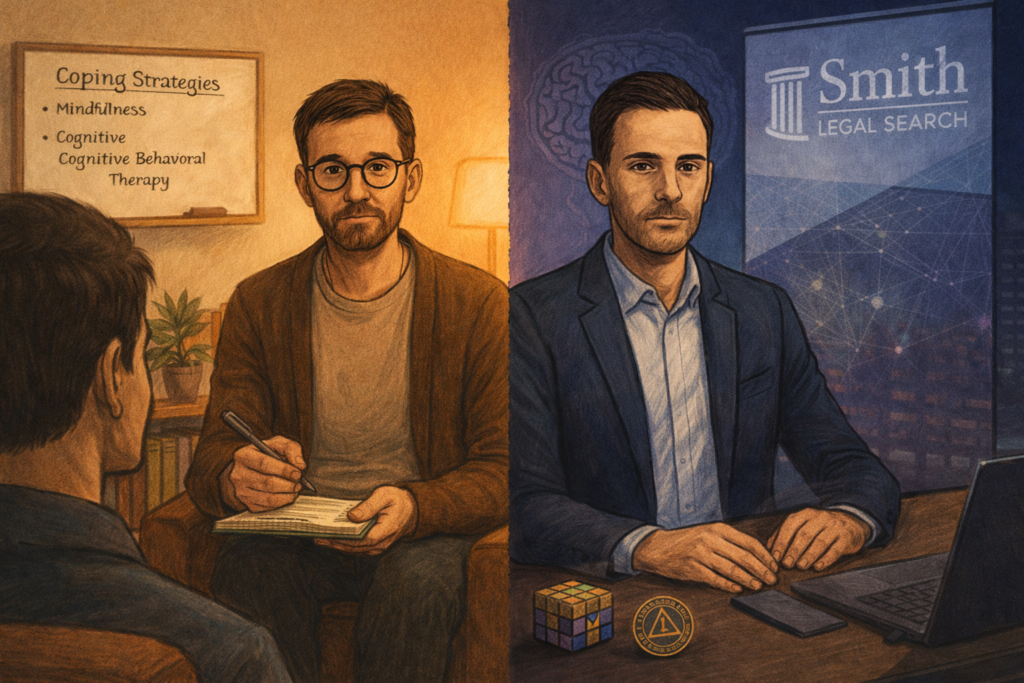
Before building careers, I helped rebuild lives one conversation at a time.
I did not set out to be a counsellor because it felt like a calling. I became one because I knew what it felt like to be lost and wanted to help others find their way. I had sat in counsellors’ offices myself and often left feeling worse, like I was moving backward. Counselling was not my forever path, but it became a necessary one, both for me and for the people I supported.
When I began studying Counselling Psychology a decade ago, I did not fully understand what it meant to be a counsellor. I became a Registered Therapeutic Counsellor, though I never loved the title. What I really was became clearer over time. A guide. A coach. A peer. Someone who had walked through darkness and was willing to sit with others there. I worked with young athletes facing anxiety, perfectionism, and fear of failure, and with youth struggling with substance use and identity. That work showed me real human resilience, and it also forced me to confront my own unfinished work.
“Those who’ve been through the fire are uniquely positioned to help others.
But only to some degree.”
Leaving counselling wasn’t a failure. It was self-respect.
What I learned in those rooms still guides me today. I learned compassion, the ability to sit with someone in their darkest moments without trying to “fix” them, just making sure they knew they weren’t alone. I learned honesty, both with myself and with others, because growth only happens when the truth is spoken out loud. I learned resilience, the quiet strength to get back up after setbacks and to keep walking forward even when the path isn’t clear. And I learned empathy, not as a skill but as a way of being, understanding that every person’s pain and story deserves to be heard. I didn’t leave that chapter behind. I integrated it into my life and my work. Those lessons continue to shape every conversation I have, every relationship I build, and the man I am today.